Why can’t I sleep after a breakup, and what helps?
Struggling to sleep after a breakup is common, and research links breakups with more insomnia symptoms. For most people it eases with time. What may help: get up rather than lie there when you can’t sleep, write tomorrow’s jobs down before bed, go easy on alcohol and late coffee, and move during the day. If it lasts for months, talk to your GP about CBT for insomnia.
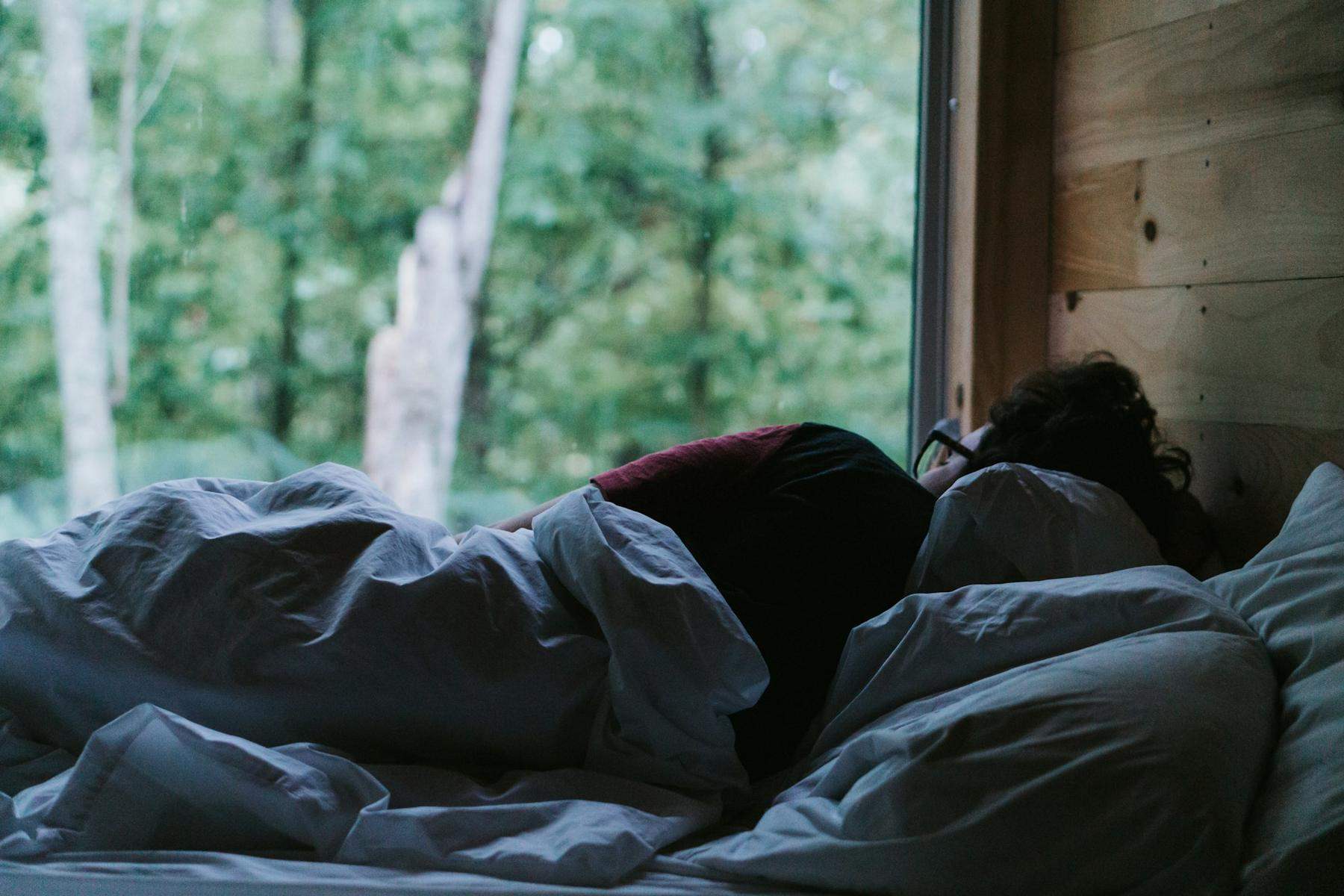
The day is fine, more or less. You get through work, you eat something, you even laugh at a friend’s message. Then you turn the light off and the house goes quiet, and it starts. The last conversation, the holiday you’d booked, the thing you should have said. You check the time: 1.14. Then 2.40. Then it’s 4am and the birds are starting, and you’re doing sums about how much sleep you could still get if you dropped off right now.
If that sounds like your nights at the moment, you’re in very ordinary company. Sleep is one of the first things a breakup knocks, and a lot of it comes down to a mind that won’t stop going over things, which is why it can feel so much like not being able to stop thinking about your ex. The good news is that there’s solid research on sleep, and some of it is surprisingly practical.
Is it normal not to be able to sleep after a breakup?
Yes, very. Research links breakups with sleep trouble across quite different groups of people. A large study of teenagers in China found that those who had been through a breakup in the past year were more likely to report insomnia symptoms, and more likely to develop new ones over the following year (Liu et al., 2023). In a survey of university students, the people most upset by a breakup also reported more intrusive thoughts and more disturbed sleep (Field et al., 2009).
Neither study can prove the breakup caused the bad nights, and the first was of teenagers rather than adults. But the pattern fits what grief research has found for a long time. A review of 85 studies of people grieving a death found that sleep problems were common after a loss, and tended to be worse when the grief was more intense (Lancel et al., 2020). A breakup is a different kind of loss, but the overlap helps explain why grief and sleep get so tangled up together.
So if you’re lying awake, it isn’t because you’re handling this badly. It’s because something that mattered has gone.
Why does a breakup keep you awake?
Mostly because night is when there’s nothing else to think about. During the day, work, other people and the washing up all take a share of your attention. Lie down in the dark and the breakup gets the room to itself.
Your mind keeps working on it
In a study of recently separated adults, people who were still very wrapped up in their ex slept less well, measured with a wrist monitor rather than by asking them (O’Hara, Mehl & Sbarra, 2023). That study can’t say which came first, but it’s a fair description of what a lot of people feel: the more the mind is chewing on the relationship, the harder it is to switch off.
Then you start worrying about the sleep itself
After a few bad nights, a second worry tends to join the first. You lie there thinking about the breakup, and also about how tired you’ll be tomorrow, and you keep checking the clock. One influential model of insomnia suggests that this kind of worry about not sleeping, and the clock-watching that goes with it, keeps the body alert and makes sleep harder to come by (Harvey, 2002). It’s a theory rather than a trial, though it’s been widely used and tested since. It’s useful mainly because it shows you a loop you can step out of.
The evenings have changed shape
If you lived together, or spent most evenings together, the hours before bed may be the time you miss them most. The side of the bed that’s empty, the person you’d tell about your day, the routine of who locks the door. Not much research measures this, but almost everyone who has been through a breakup will recognise it.
The phone comes to bed with you
It’s very easy to reach for your phone at midnight and find yourself on their profile, or rereading old messages. The light itself may play a small part: in a small sleep-lab study, people who read on a tablet for about four hours before bed took a little longer to fall asleep, and felt less alert the next morning, than when they read a printed book (Chang et al., 2015). That study said nothing about scrolling or checking an ex, though, and what you look at at midnight probably matters more than the screen. Checking their social media has its own guide.

How long will the sleepless nights last?
Nobody can give you a number, because no study has tracked it for breakups. The closest evidence comes from grief after a death. In a study of 220 recently bereaved adults, followed over about a year, nearly half kept sleeping fairly well throughout, around four in ten saw their insomnia ease, and about one in ten had sleep problems that lasted (de Lang et al., 2024). Changes in sleep moved closely with changes in grief.
That isn’t breakup data, and the numbers shouldn’t be read as a forecast for you. But it does suggest that bad sleep after a loss more often settles than sticks. In the meantime, expect it to wobble. A run of better nights followed by a terrible one, maybe after a reminder or some news, is normal and doesn’t mean you’re back at the start.
You’re not failing at sleep. Your mind is working overtime on something that mattered, and it does settle.
Does a bad night make everything feel worse?
It often does, and knowing that can be a small comfort the next day. Losing sleep makes people more emotionally reactive and more inclined to pull away from others (Ben Simon et al., 2020). In one experiment, cutting sleep for just two nights made people angrier in a frustrating situation, and stopped them settling down the way well-rested people did (Krizan & Hisler, 2019). None of that research was about breakups. But if you wake after three hours and the whole thing feels unbearable by mid-morning, some of that weight may be the tiredness talking, not the truth about how things will go.
What helps you sleep after a breakup?
Small, boring changes, mostly, done most nights. None of these has been tested on people after a breakup specifically, so treat them as things worth trying rather than promises. Most come from the research on sleep in general.
Get up rather than lie there
If you’ve been awake for what feels like a long while, get up. Go to another room with low light and do something dull, like folding washing, reading something undemanding or listening to a quiet podcast, and go back to bed only when you feel sleepy. Sleep experts in the US suggest this, along with keeping the bed for sleep, as one of the techniques that can help with insomnia, though full CBT for insomnia has stronger support (Edinger et al., 2021). The point is to stop the bed becoming the place where you lie and think about them.
Turn the clock round
Clock-watching feeds the worry about sleep. Turn the clock to face the wall, or put your phone where you can’t see it from bed. You don’t need to know it’s 3.20. You only need to know whether you feel sleepy.
Write tomorrow down
If your head fills with jobs as well as the breakup, try spending five minutes before bed writing a to-do list for the next few days, as specific as you can make it. In one small sleep-lab study, young adults who did this fell asleep sooner than those who listed what they had already done (Scullin et al., 2018). It was one night, in healthy sleepers, so don’t expect miracles. It costs nothing to try.
Give the replay a time that isn’t bedtime
Some of what keeps you awake is unfinished thinking about the relationship. It can help to give that its own slot earlier in the evening: twenty minutes at the kitchen table, writing down what’s going round in your head, then closing the notebook. There isn’t good research on this exact trick for breakups. It simply follows from the idea that worry in bed keeps you alert (Harvey, 2002), and it means that when the thought arrives at midnight, you can tell yourself it already has a time.
Go easy on the wine
A couple of glasses can feel like the only thing that gets you to sleep at the moment. The catch is what happens later. Research on healthy sleepers shows alcohol does help people drop off, but makes the second half of the night more broken (Ebrahim et al., 2013). That 4am wake-up can be partly the drink.
Keep coffee to the morning
In a small study, a large dose of caffeine taken six hours before bed still cut sleep by more than an hour, and people didn’t notice (Drake et al., 2013). That was a big dose, more than most people have in one go, but it’s a fair reason to keep coffee, strong tea and energy drinks to earlier in the day, especially when you’re already running on empty.
Move in the daytime
Regular exercise is linked to better sleep: a review of 66 studies found modest improvements, especially in how well people felt they had slept (Kredlow et al., 2015). It doesn’t have to be the gym. A brisk walk in daylight, a swim, or a bike ride with a friend all count. The NHS suggests not exercising in the four hours before bed.
Keep the usual habits, without expecting too much
The standard advice, like regular sleep times, a dark, quiet room and a wind-down before bed, is backed by research linking it to better sleep, but whether following any one tip helps has rarely been tested directly (Irish et al., 2015). And for insomnia that has lasted months, expert guidance says sleep tips on their own aren’t enough (Edinger et al., 2021). So keep them up, but don’t blame yourself if a lavender pillow spray hasn’t fixed a broken heart.
Keep some distance
In a study of recently separated adults, spending more time in person with an ex went with less efficient sleep over several months (Coppola et al., 2023). That doesn’t prove contact causes bad nights, and plenty of people have good reasons to stay in touch. But if late-night messages with them are part of what keeps you awake, it may be worth stepping back. The no contact rule explains what the evidence says.


What if it’s been going on for months?
Then it’s worth getting proper help, because good help exists. The NHS suggests seeing a GP if changing your sleep habits hasn’t helped, if you’ve had trouble sleeping for months, or if it’s affecting your daily life. For insomnia that has lasted months, a type of talking therapy called CBT for insomnia, or CBT-I, has good evidence behind it: in a review of 20 trials, people fell asleep sooner and spent less time awake in the night after treatment, and the gains seemed to last (Trauer et al., 2015).
It doesn’t have to be face to face. A review of 11 trials found that structured online CBT-I programmes also improved insomnia (Zachariae et al., 2016). In the UK, NICE, which advises the NHS, recommends one such online programme, Sleepio, for people who would otherwise be given sleep tips or sleeping pills. Ask your GP what’s available where you live. GPs these days rarely prescribe sleeping pills for insomnia, and if they do it’s usually only for a short time.
If the nights are bringing thoughts of hurting yourself, or of not wanting to be here, please don’t wait for the morning. Go to our help now page for people you can talk to straight away, at any hour.
How will I know I’m getting there?
Usually you notice it afterwards. You realise you slept through without checking the time. You wake at 6 rather than 4, and it’s the alarm, not your thoughts. You lie down, think of them for a minute, and then think about something else, and the next thing you know it’s morning. If you’re still right at the beginning, the first week after a breakup covers the basics of getting through each day.
There will still be the odd bad night, often around dates, news or a song in the supermarket. One bad night is one bad night.
If it helps to see the pattern, a short daily check-in can show you the nights are getting better even when one rough one makes it feel otherwise. That’s part of what Reorient is for. Either way, be patient with yourself. Sleep usually comes back as the rest of you starts to settle.
Common questions
Is it normal not to be able to sleep after a breakup?
Yes. Sleep is one of the first things a breakup knocks, and research links breakups with more insomnia symptoms. Lying awake replaying things, waking at 4am or sleeping in short broken stretches are all common reactions to a loss, not a sign that something is wrong with you.
How long does it take to sleep normally again after a breakup?
No study has measured this for breakups, so nobody can give you a fixed number. Research on grief after a death found that for most people, sleep problems eased over the following year, and many never had serious trouble at all. Bad nights can come back for a while around reminders or news.
When should I see a GP about not sleeping?
The NHS suggests seeing a GP if changing your sleep habits hasn’t helped, if you’ve had trouble sleeping for months, or if it’s affecting your daily life. GPs often suggest CBT for insomnia, face to face or online, which has good evidence for insomnia that has lasted months.
Where Reorient fits
Reorient is an app for getting through a breakup. It fits a recovery timeline to your situation, and gives you a daily check-in, a guided journal, a no-contact counter and tools for hard moments. It’s built on the same research as this article, and it isn’t therapy. If it would help, try it free for 7 days, no card needed.
Sources
- Liu, Liu, Yang & Jia (2023). Starting a romantic relationship, breakups, and sleep: A longitudinal study of Chinese adolescents. Behavioral Sleep Medicine.
- Field, Diego, Pelaez, Deeds & Delgado (2009). Breakup distress in university students. Adolescence, 44(176), 705 to 727.
- Lancel et al. (2020). Sleep disturbances in bereavement: A systematic review. Sleep Medicine Reviews, 53, 101331.
- de Lang, Buyukcan-Tetik, de Jong, Lancel & Eisma (2024). Trajectories of insomnia following bereavement. Sleep Medicine, 114, 159 to 166.
- O’Hara, Mehl & Sbarra (2023). Spinning your wheels: Psychological overinvolvement and actigraphy-assessed sleep efficiency following marital separation. International Journal of Behavioral Medicine, 30(3), 307 to 319.
- Coppola, Mehl, Tackman, Dawson, O’Hara & Sbarra (2023). Sleep efficiency and naturalistically-observed social behavior following marital separation: The critical role of contact with an ex-partner. Journal of Social and Personal Relationships, 40(6), 1920 to 1942.
- Harvey (2002). A cognitive model of insomnia. Behaviour Research and Therapy, 40(8), 869 to 893.
- Chang, Aeschbach, Duffy & Czeisler (2015). Evening use of light-emitting eReaders negatively affects sleep, circadian timing, and next-morning alertness. Proceedings of the National Academy of Sciences, 112(4), 1232 to 1237.
- Krizan & Hisler (2019). Sleepy anger: Restricted sleep amplifies angry feelings. Journal of Experimental Psychology: General, 148(7), 1239 to 1250.
- Ben Simon, Vallat, Barnes & Walker (2020). Sleep loss and the socio-emotional brain. Trends in Cognitive Sciences, 24(6), 435 to 450.
- Edinger et al. (2021). Behavioral and psychological treatments for chronic insomnia disorder in adults: An American Academy of Sleep Medicine clinical practice guideline. Journal of Clinical Sleep Medicine, 17(2), 255 to 262.
- Scullin, Krueger, Ballard, Pruett & Bliwise (2018). The effects of bedtime writing on difficulty falling asleep: A polysomnographic study comparing to-do lists and completed activity lists. Journal of Experimental Psychology: General, 147(1), 139 to 146.
- Ebrahim, Shapiro, Williams & Fenwick (2013). Alcohol and sleep I: Effects on normal sleep. Alcoholism: Clinical and Experimental Research, 37(4), 539 to 549.
- Drake, Roehrs, Shambroom & Roth (2013). Caffeine effects on sleep taken 0, 3, or 6 hours before going to bed. Journal of Clinical Sleep Medicine, 9(11), 1195 to 1200.
- Kredlow, Capozzoli, Hearon, Calkins & Otto (2015). The effects of physical activity on sleep: A meta-analytic review. Journal of Behavioral Medicine, 38(3), 427 to 449.
- Irish, Kline, Gunn, Buysse & Hall (2015). The role of sleep hygiene in promoting public health: A review of empirical evidence. Sleep Medicine Reviews, 22, 23 to 36.
- Trauer, Qian, Doyle, Rajaratnam & Cunnington (2015). Cognitive behavioral therapy for chronic insomnia: A systematic review and meta-analysis. Annals of Internal Medicine, 163(3), 191 to 204.
- Zachariae, Lyby, Ritterband & O’Toole (2016). Efficacy of internet-delivered cognitive-behavioral therapy for insomnia: A systematic review and meta-analysis of randomized controlled trials. Sleep Medicine Reviews, 30, 1 to 10.
- National Institute for Health and Care Excellence (2022). Sleepio to treat insomnia and insomnia symptoms. Medical technologies guidance MTG70.
Written by The Reorient Team and checked against the published research it cites. How we write our content and the research behind Reorient. This is general information, not a substitute for professional help.
Filed under